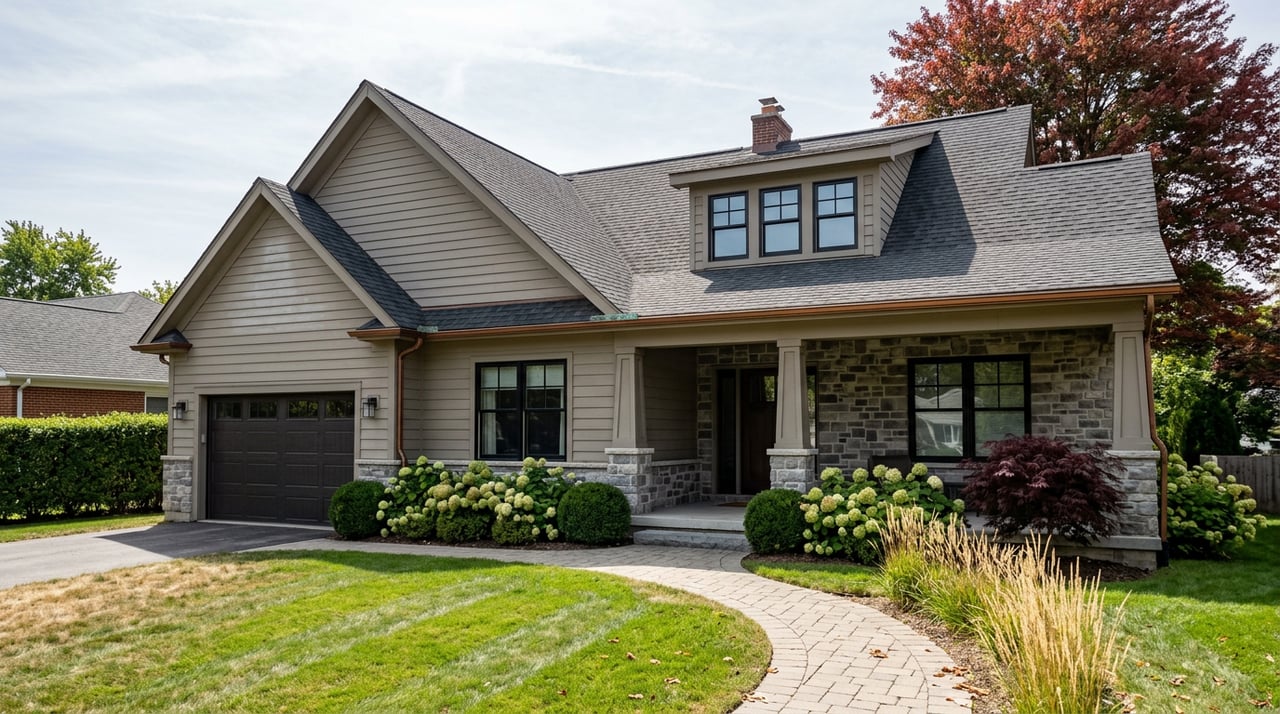
Drive from the Village of Piermont into the hamlet of Blauvelt and you will not notice the boundary. The houses on either side share the same rolling terrain, the same proximity to the river, often the same builder-era colonials and capes. Both addresses fall inside the Town of Orangetown. Both send their kids to South Orangetown schools. If you pulled up two listings, one on each side of that line, at the same price point, you would have every reason to assume the total cost of owning them is close to identical.
It isn't. The Piermont home carries a second tax bill the Blauvelt home never sees.
The Second Bill Nobody Puts in the Listing
What changes is whether a fourth bill shows up: the village tax.
Rockland is unusual for how many of its residents live inside an incorporated village rather than an unincorporated hamlet. A village is its own unit of government, with its own board of trustees, its own budget, and in many cases its own assessment roll separate from the town's. That separate roll means a separate bill. Rockland County Info reports that a home in Piermont pays Orangetown town tax and South Orangetown school tax just like its Blauvelt neighbor, then adds a Piermont village tax on top. Across Rockland, that additional layer commonly runs $1,500 to $4,000 a year depending on the home's assessed value, and it applies whether the village in question is Piermont, Airmont, Suffern, or any of Rockland's other incorporated villages.
None of that shows up on a home valuation tool or a portal's tax estimate, which typically pulls the most recent school tax line and stops there.
Why So Much of Rockland Chose to Incorporate
The village count itself tells a story. Most of Rockland's incorporated villages sit inside the Town of Ramapo, and several of them are relatively young as municipalities go. Airmont incorporated in 1991. Kaser incorporated in 1990. Wesley Hills incorporated in 1982. None of these were old colonial river towns finding their footing. They were newer communities choosing, within living memory, to become their own unit of government rather than remain folded into the town around them.
That choice buys something specific: local control. An incorporated village sets its own zoning code, runs its own building permit process, and in many cases fields its own police department instead of relying on the town's. Suffern's police department has served the village since 1896. Spring Valley maintains its own village force too. Meanwhile a resident of an unincorporated hamlet like Bardonia or Congers calls the Town of Clarkstown or Town of Haverstraw police, because there is no separate village government to run one.
The tax layer is the price of that autonomy. A village board that wants to set its own snow removal schedule, approve its own site plans, and run its own patrol needs its own revenue to do it, and that revenue comes from a bill the town's unincorporated areas never receive.
What the Tax Stack Actually Looks Like
| Tax layer | Village address | Hamlet address |
|---|---|---|
| County tax | Yes | Yes |
| School tax | Yes | Yes |
| Town tax | Yes | Yes |
| Village tax (own budget, own roll) | Yes | No |
That fourth row is the whole difference. It has nothing to do with square footage, lot size, or how recently the kitchen was renovated. It has to do with which side of a line drawn decades ago, or in some cases just thirty-odd years ago, a given parcel happens to sit on.
The One Village That Chose to Undo It
The line isn't permanent in one direction only. In April 2022, the Village of South Nyack dissolved, its residents having voted to give up village government and fold back into the Town of Orangetown. Where the county's own municipal directory still counts nineteen incorporated villages, a more recent tally puts the number at eighteen precisely because of that dissolution.
For homeowners in the former South Nyack, that vote meant losing a village government, but it also meant losing a village tax bill. It's a reminder that the village line isn't a fixed feature of a property the way its lot size or elevation is. It's a governance choice a community made, and one a community can choose to unmake.
What to Ask Before You Compare Two Listings
If you're comparing a home in an incorporated village to one in an unincorporated hamlet, whether that's Piermont against Blauvelt, Suffern against a nearby stretch of Ramapo, or Airmont against Monsey, the school tax estimate a listing quotes is only part of the answer. Airmont's own median home value runs near $565,000, comparable to plenty of hamlet inventory nearby, but a village resident there is paying county tax, school tax, town tax, and, as Rockland County Info notes, village tax, where a hamlet buyer down the road skips that fourth line entirely.
The most reliable way to see the real difference is to ask the seller for the prior year's complete tax bill, all of it, not just the school portion an agent might reference from memory. Village tax bills typically arrive separately from town and county bills, so a seller who only hands over one statement may not be showing you the full picture, not out of any intent to mislead, but because that's simply how the county's billing is structured.
Once you have both bills in hand, the comparison becomes straightforward. You can weigh the extra cost of village services, an independent police department, a dedicated public works crew, faster response on local zoning matters, against what an unincorporated hamlet address saves you every year. Neither choice is right for every buyer. What matters is knowing the choice exists before you're under contract.
A Few Questions This Raises
Does every village in Rockland charge the same extra amount? No. Each village sets its own budget and, in many cases, maintains its own assessment roll, so the add-on varies by village and by year. The $1,500 to $4,000 range holds as a general pattern across the county, but the exact figure for any one address depends on that village's current budget and the home's assessed value.
If a village can dissolve, could that happen again? It's possible. South Nyack's 2022 dissolution shows the process exists and that a community can vote through it, but dissolution is a local decision made by that village's residents, not something a buyer should assume is likely for any specific village they're considering today.
Does the town tax rate stay the same across every hamlet in Rockland? No. A hamlet's town tax depends on which of Rockland's five towns it sits in: Clarkstown, Haverstraw, Orangetown, Ramapo, or Stony Point. Two hamlets in different towns, even without a village tax layer involved, can still carry different total bills.
Comparing two Rockland addresses on price alone leaves out the layer that often explains why two similar homes land at different monthly costs. If you're weighing a village address against a hamlet a few minutes away and want the full tax picture before you write an offer, Nicole Isaacs can help pull the actual bills side by side so the comparison is based on what you'll really pay, not just what the listing shows. Let's Connect.
This article is general information, not legal, tax or financial advice. Consult a qualified professional about your situation.